Capturing Romance: The Portrait Wedding Kissing Couple Vector
There's a moment at every wedding that feels suspended in time. It might be the first look, the exchange of vows, or that quiet second when the world falls away and it's just the two of you. As designers, we're often tasked with bottling that feeling—translating an emotion into a visual asset that can live on a wedding invitation, a social media post, or a piece of merchandise. This is exactly where a resource like the Portrait Wedding Kissing Couple Vector shines. It's more than just a simple illustration; it's a versatile design element built to evoke intimacy and elegance across a multitude of projects. If you're working on anything from a wedding stationery suite to a romantic brand identity, understanding how to leverage this kind of asset can save you time and elevate your final product.
Why This Illustration Resonates
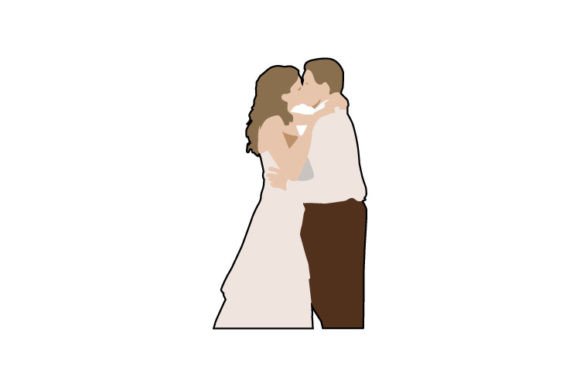
What makes a kissing couple vector so effective? It boils down to universality and abstraction. A photograph of a specific couple is beautiful, but it's also literal. An illustration, especially one rendered in a clean vector style, allows any viewer to project their own story onto the image. The faces are suggested, not defined. The emotion is conveyed through posture, proximity, and flowing lines rather than specific features. This makes it incredibly powerful for branding and marketing. A wedding planner could use it on their website to represent the joy they help create, without needing a model release. A jewelry brand could use it on packaging to subtly evoke commitment and love. The visual language speaks directly to the heart, bypassing the need for a specific narrative.
The style itself matters. A good portrait wedding kissing couple illustration balances detail with simplicity. Too much detail, and it becomes cluttered at small sizes. Too little, and it loses its emotional impact. The best versions use flowing lines to suggest movement—perhaps in the veil, the hair, or the fabric of the dress. They often employ a limited color palette, which is a huge advantage for designers. You can easily recolor the vector to match any brand scheme, from soft pastels for a romantic blog to bold, modern tones for a contemporary invitation suite. This adaptability is the core strength of a premium vector asset.
Practical Applications for Every Creative Project
Let's move beyond the wedding industry for a moment. While this illustration is a natural fit for invitations and save-the-dates, its utility is far broader. Think about a small business owner launching a new line of scented candles with romantic themes. The kissing couple vector could become a central element on the label design, instantly communicating the product's mood. A social media manager for a dating app could use a stylized version of the illustration in ad graphics to represent connection and romance in a way that feels inclusive and modern.
For those in editorial design, this asset is a gem. Imagine a magazine spread about relationship milestones or a blog post on modern love stories. Using the vector as a recurring decorative element—perhaps as a divider, a page corner accent, or a background watermark—adds a layer of sophisticated cohesion to the layout. It becomes part of the publication's visual identity. Similarly, for digital products like printable wall art or greeting card templates, the vector serves as a high-quality, scalable foundation that won't pixelate, no matter the print size.
The file formats included with a professional asset like this are crucial for real-world use. You'll typically receive an Ai or Eps file for full editing in Adobe Illustrator, allowing you to manipulate every anchor point and color. SVG is perfect for web use, ensuring crispness on any screen. PNG files with transparent backgrounds are ready to drop into presentations, social media posts, or mockups in Canva or Photoshop. JPG versions are useful for quick sharing or use in situations where a transparent background isn't needed. Having all these formats means you're not stuck converting files or compromising on quality.
Integrating the Asset into Your Design Workflow
So, you've downloaded the files. Now what? The first step is to consider the context. Is this for a primary logo? If so, you might simplify the illustration further, focusing on the silhouette. Is it for a background pattern on a website? You might use a very light, low-opacity version to add texture without competing with text. The key is to let the asset serve the project's hierarchy, not dominate it.
A critical consideration is font pairing. If you're using this romantic illustration, the typography you choose alongside it will set the final tone. A delicate script font might complement the elegance for a wedding invitation. However, pairing it with a clean, modern sans-serif font can create a beautiful contrast, making the design feel fresh and less traditionally "wedding." This juxtaposition can be very effective for brands that want to communicate romance without feeling cliché. Test a few combinations. Lay the vector next to different typefaces and see what conversation they have together. Does the font feel too heavy? Too playful? The right pairing will feel harmonious.
Color is your next lever. Don't just accept the default colors. If your brand uses a navy blue and gold, recolor the illustration to match. This simple act transforms a generic asset into a custom piece of your brand identity. In Illustrator, this is a matter of minutes. The goal is visual consistency. When your social media graphic uses the same color story as your packaging, which uses the same illustration style as your website, you build a cohesive world that customers recognize and trust.
Making Smart Choices for Long-Term Value
When sourcing any design asset, especially for commercial use, licensing is non-negotiable. You need to ensure the license covers your intended use—whether it's for a client project, print-on-demand merchandise, or a digital download you plan to sell. A reputable source will make this clear. Look for licenses that allow for modification and use in end products for sale. This protects you legally and allows for creative freedom.
Think about scalability. A wedding kissing couple vector is perfect for this. Because it's vector-based, you can scale it from a tiny favicon on a browser tab to a large-format poster for a wedding venue without losing an ounce of quality. This makes it a wise investment for a design toolkit. You're not buying a one-time-use image; you're adding a versatile piece to your library that can be reinterpreted for years to come.
Finally, don't be afraid to deconstruct it. Maybe you only love the way the veil flows. Extract that element and use it as a standalone decorative flourish. Perhaps the overall composition is too busy for your needs, but the couple's hands are beautifully rendered. Crop that detail and use it as a subtle icon. The true value of a well-crafted design asset lies in its potential to be broken apart and reassembled in ways the original creator might never have imagined. It’s a starting point for your own creativity, not the final answer.
In the end, design is about communication. The Portrait Wedding Kissing Couple Vector is a shorthand for love, connection, and celebration. By understanding its strengths—from its emotional resonance and visual flexibility to its practical file formats—you can wield it effectively to tell richer stories, build stronger brands, and create designs that genuinely connect with your audience. It’s a tool, and like any good tool, its power is revealed in how you choose to use it.