Effortless Elegance: Mastering the Luxury Wedding Invitation Card
There is a distinct feeling you get when you open an envelope and find a piece of stationery that simply feels expensive. It isn't always about gold leaf or heavy embellishments; often, it is about restraint. It is the weight of the paper, the crispness of the lines, and the breathing room in the layout. For graphic designers, stationery entrepreneurs, and creative professionals, capturing this "quiet luxury" can be a challenge. It requires a deep understanding of negative space and typography. If you have been searching for a design asset that bridges the gap between modern minimalism and high-end sophistication, the Luxury Wedding Invitation Card, Minimal template offers a streamlined solution that doesn't sacrifice aesthetic quality.
The Anatomy of Minimalist Luxury
When we talk about "minimal" design, we often think of stark white spaces and black text. While that is part of it, true minimalism in wedding stationery is about intentionality. Every element on the page must earn its place. The "Luxury Wedding Invitation Card" template embraces this philosophy. By stripping away unnecessary ornamental flourishes, the design allows the typography and the layout to do the heavy lifting.
Visually, this approach relies heavily on proportion. The spacing between the letters (kerning) and the lines of text (leading) is meticulously balanced to create a rhythm that is pleasing to the eye. This type of design signals confidence. It suggests that the content—names, dates, and venues—is important enough to stand on its own without distraction. For your clients or your own brand, using a template with this visual DNA instantly elevates the perceived value of the event or product. It moves the aesthetic away from "crafty" and into "editorial."
Practical Versatility: Beyond the Wedding Day
While the file is optimized for nuptials, the underlying structure of a Luxury Wedding Invitation Card is incredibly versatile. As a designer or small business owner, you can repurpose this layout for a variety of high-end applications. The clean lines make it an excellent starting point for:
- Brand Identity Systems: Use the layout to mock up letterheads or thank-you notes for boutique brands looking for a sophisticated voice.
- Editorial Design: The typography hierarchy works beautifully for magazine layouts, lookbooks, or menu designs for upscale restaurants.
- Digital Marketing Assets: Adapt the design for Instagram stories, email headers, or digital product covers where a "premium" feel is required to increase conversion rates.
- Packaging Inserts: For e-commerce businesses selling luxury goods, a care card or thank-you note designed with this level of minimalism reinforces the quality of the product inside.
The key takeaway here is that a template is not a restriction; it is a starting point. By changing the context, you turn a wedding card into a powerful branding tool.
Streamlining Your Workflow with Editable Assets
One of the biggest hurdles in design is the translation from screen to print. We have all experienced the frustration of a file that looks perfect in a browser but falls apart at the printer due to incorrect bleeds, RGB color modes, or rasterized text. This specific template solves those pain points by being READY TO PRINT.
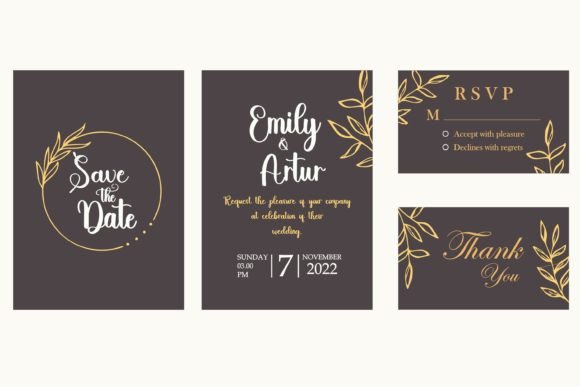
The package includes an editable vector file, which is the gold standard for print production. Because it is vector-based, you can scale the elements without losing quality. This is particularly useful if you decide to pivot the design from a standard card to a large-format poster or signage. Furthermore, the file is structured with specific dimensions in mind: a standard 5″x7″ wedding card and a 3.5″x5″ RSVP card. This pre-formatting saves you hours of setup time, allowing you to focus on the creative direction rather than technical specifications.
Mastering the Typography
Typography is the voice of your design. In a minimalist layout, the font choice carries the weight of the personality. A serif font might suggest tradition and heritage, while a sans-serif font feels more contemporary and clean. The Luxury Wedding Invitation Card, Minimal template utilizes free fonts, which is a massive advantage for both designers and clients.
Using free, commercially licensed fonts removes the barrier of cost and legal complexity often associated with premium typefaces. However, just because a font is free doesn't mean it lacks character. When working with this template in Adobe Illustrator, you have the opportunity to experiment with font pairing. Consider mixing a delicate, thin serif for the main details with a bold, modern sans-serif for the names to create visual contrast. This interplay between different type styles adds depth to the design without cluttering the page.
Ensuring Readability and Hierarchy
When editing the text, keep the principle of hierarchy in mind. The most important information (the names of the couple or the brand headline) should be the most prominent. The secondary information (date, time, location) should be supportive, not competing. The minimal style of this template makes it easier to maintain this hierarchy because there are fewer visual distractions. Ensure that your line spacing allows the text to breathe; luxury is often synonymous with space.
From Template to Treasure
Ultimately, the goal of using a high-quality template like this is to produce professional results efficiently. Whether you are a freelancer delivering a project to a bride-to-be, or a marketing manager creating assets for a high-end product launch, the tools you use dictate the outcome. The Luxury Wedding Invitation Card, Minimal template provides the structure of professional print design—correct sizing, vector scalability, and organized layers—combined with the aesthetic appeal of modern minimalism.
By leveraging the editable nature of the file, you can transform a standard invitation into a bespoke piece of art. It proves that you don't need to start from a blank canvas to create something unique. Sometimes, starting with a refined, minimal framework allows your creativity to flourish within the boundaries of good design. It is about working smarter, ensuring visual consistency, and delivering a final product that feels polished, intentional, and undeniably luxurious.